
Nutrient-Dense Snack Bars from Biofortified Crops: A New Approach to Combat Micronutrient Deficiencies in Tanzanian School Children

Article audio
Listen to a generated narration of this post.
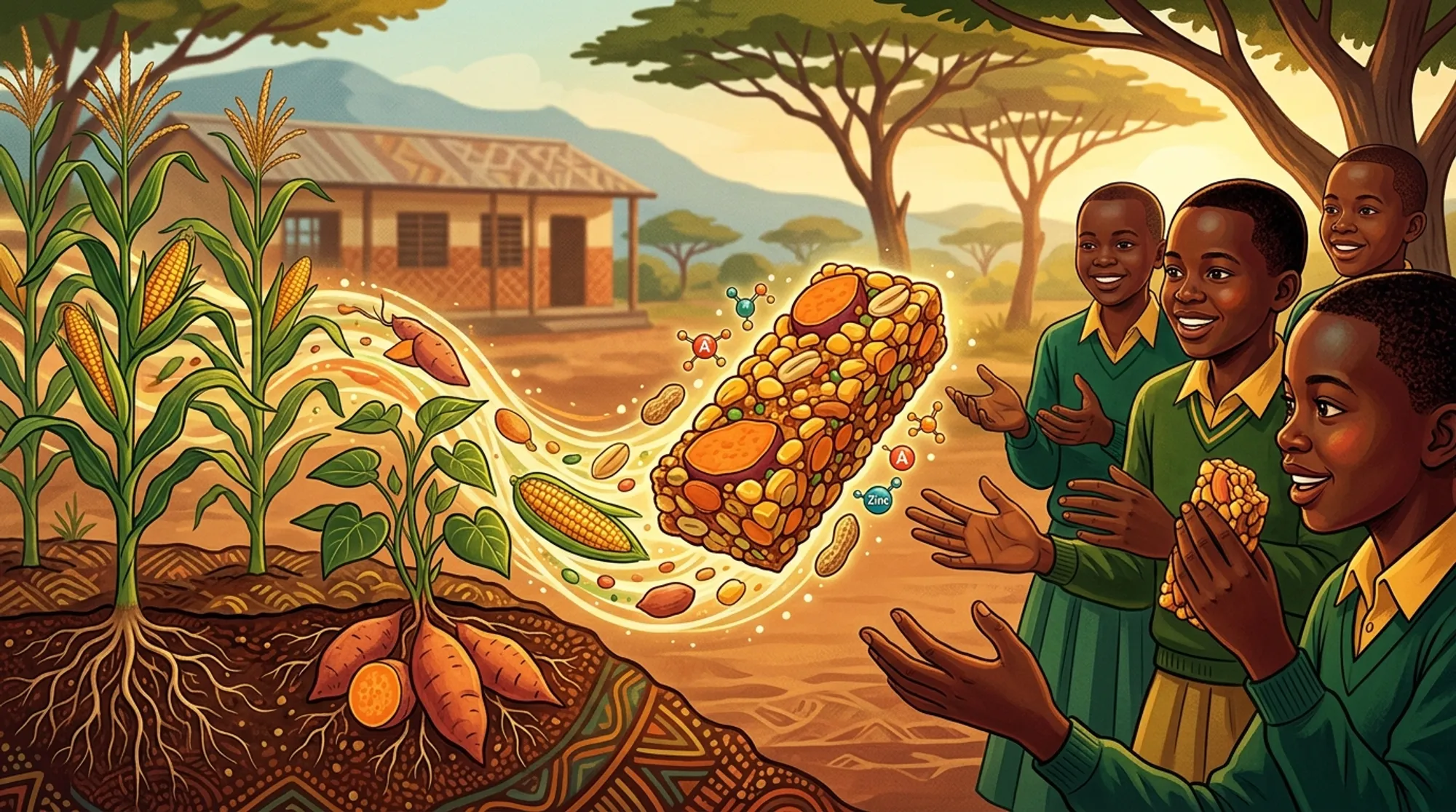
Could a simple snack bar help fight anemia and micronutrient deficiencies in Tanzanian school children? With anemia affecting up to half of adolescents in some regions of Tanzania, researchers have developed innovative snack bars using biofortified crops. These snacks are designed to be nutrient-dense, culturally acceptable, and convenient for school feeding programs, potentially offering a scalable solution to a pressing public health challenge.
TL;DR
- Snack bars made from biofortified yellow maize, beans, and other local ingredients can supply 50–70% of recommended daily intakes of key nutrients like iron, zinc, protein, and provitamin A for school-aged children.
- Partially germinating cereals and legumes before processing increases carbohydrate, fat, fiber, and provitamin A content, and improves sensory acceptance of the snack bars among adolescents.
Micronutrient deficiencies, particularly iron deficiency anemia, remain a significant health concern in Tanzania, affecting approximately 30–40% of school-aged children and up to 50% of adolescents. These deficiencies impair immune function, cognitive development, and overall health, undermining the potential of young populations. Diets in Tanzania are largely based on staple crops like maize and cassava, which are low in essential vitamins and minerals. While national efforts have focused on supplementation and fortification, school-aged children and adolescents have often been overlooked. Given the rising school enrollment rates, school feeding programs offer a promising platform for delivering nutrient-rich foods that can improve health outcomes.
Researchers developed snack bars using biofortified yellow maize, Jesca/TAR-6 biofortified beans, green gram, sesame, and pumpkin seeds sourced from local smallholder farmers. The cereals and legumes were divided into two groups: one underwent partial germination (48–60 hours) to enhance nutrient availability, while the other remained non-germinated. Both sets were roasted, milled, and combined with other ingredients like banana pulp and pineapple juice to improve flavor and texture. Nutritional composition was analyzed using standardized laboratory methods, including proximate analysis and mineral quantification via Microwave Plasma-Atomic Emission Spectroscopy. Sensory evaluation with adolescent panelists assessed texture, color, aroma, appearance, and taste to guide formulation adjustments.
Partial germination significantly increased carbohydrate, fat, fiber, and provitamin A content in the snack bars. Zinc levels were slightly higher in germinated formulations, while iron content was marginally lower compared to non-germinated bars. Both germinated and non-germinated bars supplied between 50% and 70% of the Recommended Dietary Allowances for key nutrients including carbohydrate, protein, fiber, iron, and zinc, aligning with Tanzania’s School Feeding Policy targets. Sensory testing revealed that germinated bars were preferred for texture, color, aroma, and overall acceptability, whereas non-germinated bars scored better for appearance and taste. These results demonstrate that snack bars made from biofortified crops can be both nutritious and appealing to school-aged children.
This study is the first in Tanzania to develop snack bars incorporating germinated biofortified crops, presenting a culturally relevant and scalable approach to reducing micronutrient deficiencies among school children and adolescents. By leveraging locally available ingredients and simple processing techniques, these nutrient-dense snacks can be integrated into school feeding programs to improve dietary quality and support child health and development. The approach addresses a critical gap in nutrition interventions for older children and adolescents, who have traditionally been underserved by existing programs.
While the nutrient content and sensory acceptance of the snack bars are promising, further research is needed to evaluate their long-term impact on micronutrient status and health outcomes in school populations. Additionally, scaling production and ensuring consistent supply within school feeding systems will require coordinated efforts involving farmers, processors, and policymakers. The slight reduction in iron content with germination also suggests the need to balance processing methods to optimize nutrient retention. Finally, acceptance beyond the tested adolescent group and in diverse regions of Tanzania should be assessed to confirm broader applicability.