

Article audio
Listen to a generated narration of this post.
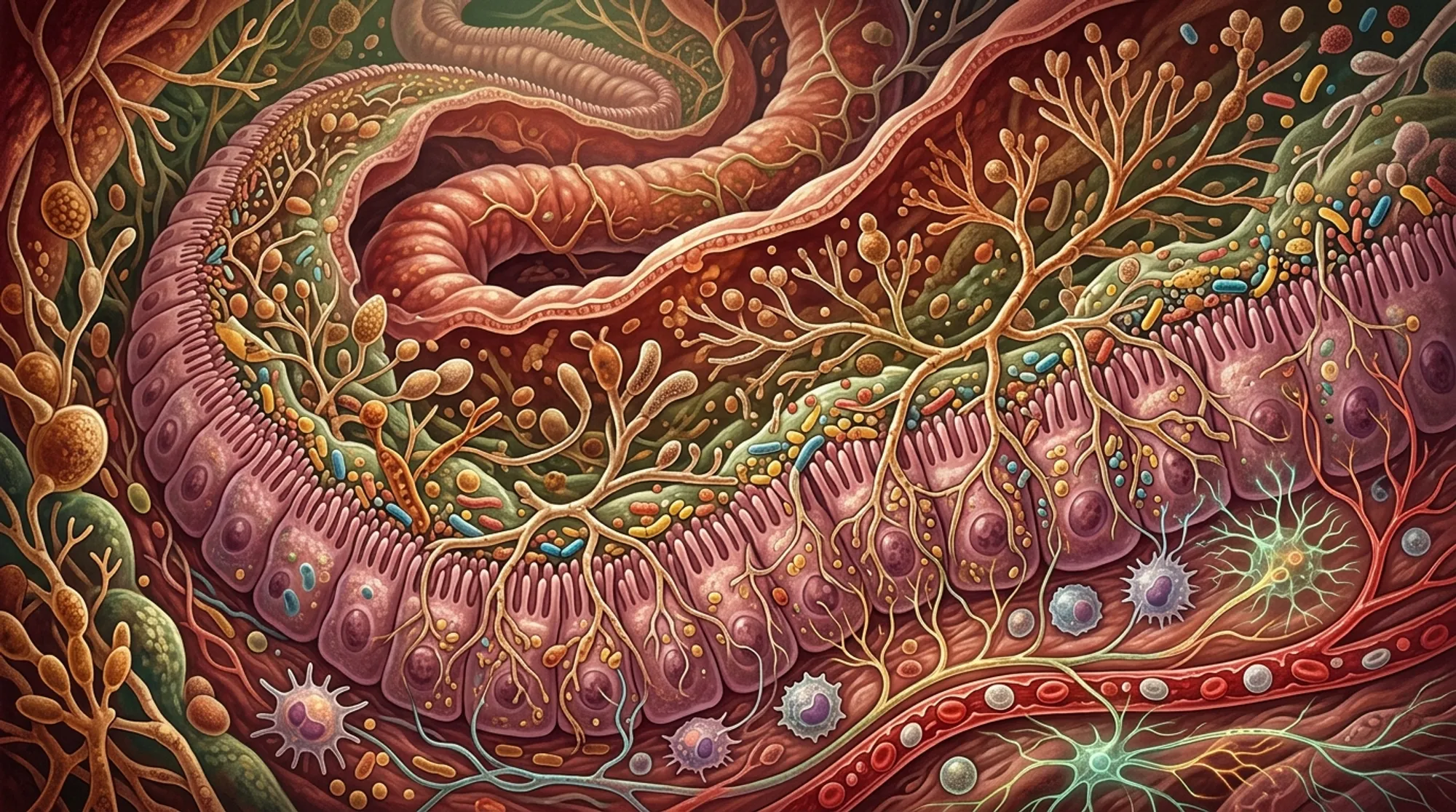
Did you know that fungi, often overshadowed by bacteria, play crucial roles in shaping the biology of our gut? While the gut microbiome is commonly associated with bacteria, recent research reveals that the fungal community—known as the mycobiome—is an important and active participant in gut health, immune function, and metabolism. This emerging field is uncovering surprising ways intestinal fungi influence our bodies and may hold keys to understanding diseases linked to the digestive system.
TL;DR
- Intestinal fungi are not just passive passengers; they actively shape the gut environment, impacting immune development, bacterial communities, and metabolism.
- Recent advances in culturing gut fungi and studying their metabolites reveal specific fungal species that colonize the gut and influence host health, including effects on obesity and liver disease.
Most microbiome research has focused on bacteria, leaving fungi in the shadows despite their presence in the gut. The fungal community, or mycobiome, has been linked to conditions like inflammatory bowel disease, pancreatic cancer, and liver disease. However, fundamental questions about which fungi truly inhabit the gut and how they interact with the host have remained unanswered. Recent studies have begun to cultivate a wide diversity of gut fungi and explore their biological roles, opening new avenues to understand their contributions to health and disease.
Two landmark studies employed innovative cultivation techniques to isolate and study fungi directly from human fecal samples. One used multiple fungus-specific media to culture over 200 fungal species from healthy volunteers, while another designed a diffusion chamber to grow fungi in conditions mimicking the gut environment—low oxygen and body temperature. These approaches allowed researchers to distinguish true gut residents from transient fungi introduced through diet. Additionally, mouse models with defined fungal and bacterial communities helped reveal how specific fungi influence metabolism and immune responses under different diets.
The research identified diverse fungal species across major fungal groups inhabiting the gut, including Candida, Fusarium, Rhodotorula, and Malassezia. Some fungi, like Fusarium foetens, were shown to colonize the gut and produce metabolites that modulate host lipid metabolism, protecting against metabolic liver disease in mice. Other fungi influenced bacterial community composition and metabolic profiles, with effects varying by diet. For example, Candida albicans colonization promoted resistance to diet-induced obesity, while Rhodotorula mucilaginosa exacerbated metabolic disease. Dietary components such as oleic acid were found to enhance fungal colonization by altering fungal cell surfaces, highlighting complex diet-mycobiome-host interactions.
These findings expand our understanding of the gut microbiome by highlighting fungi as active players in shaping gut biology. They suggest that the mycobiome influences host metabolism, immune function, and microbial community structure in ways that could affect health and disease. The discovery of fungal metabolites targeting host enzymes opens potential therapeutic avenues for metabolic diseases. Moreover, recognizing the distinct niches fungi occupy, such as the mucus layer lining the gut, emphasizes the need to study fungi in context to fully grasp their roles. This research paves the way for future studies that may translate fungal biology into clinical and nutritional strategies.
While these studies provide compelling evidence of fungi’s roles in the gut, much remains to be learned about the complexity of fungal-host interactions, especially in humans. Many findings are from mouse models or in vitro cultivation, which may not fully replicate human gut conditions. The causal relationships between fungi and diseases like obesity or liver disease require further investigation. Additionally, cultivating gut fungi under anaerobic conditions remains challenging but essential to understanding their true physiology. As the field grows, more comprehensive and mechanistic studies will be needed to translate these insights into practical health applications.