
Why Does Our Microbiome Lose Balance as We Age? The Role of Immune Surveillance in Microbial Harmony

Article audio
Listen to a generated narration of this post.
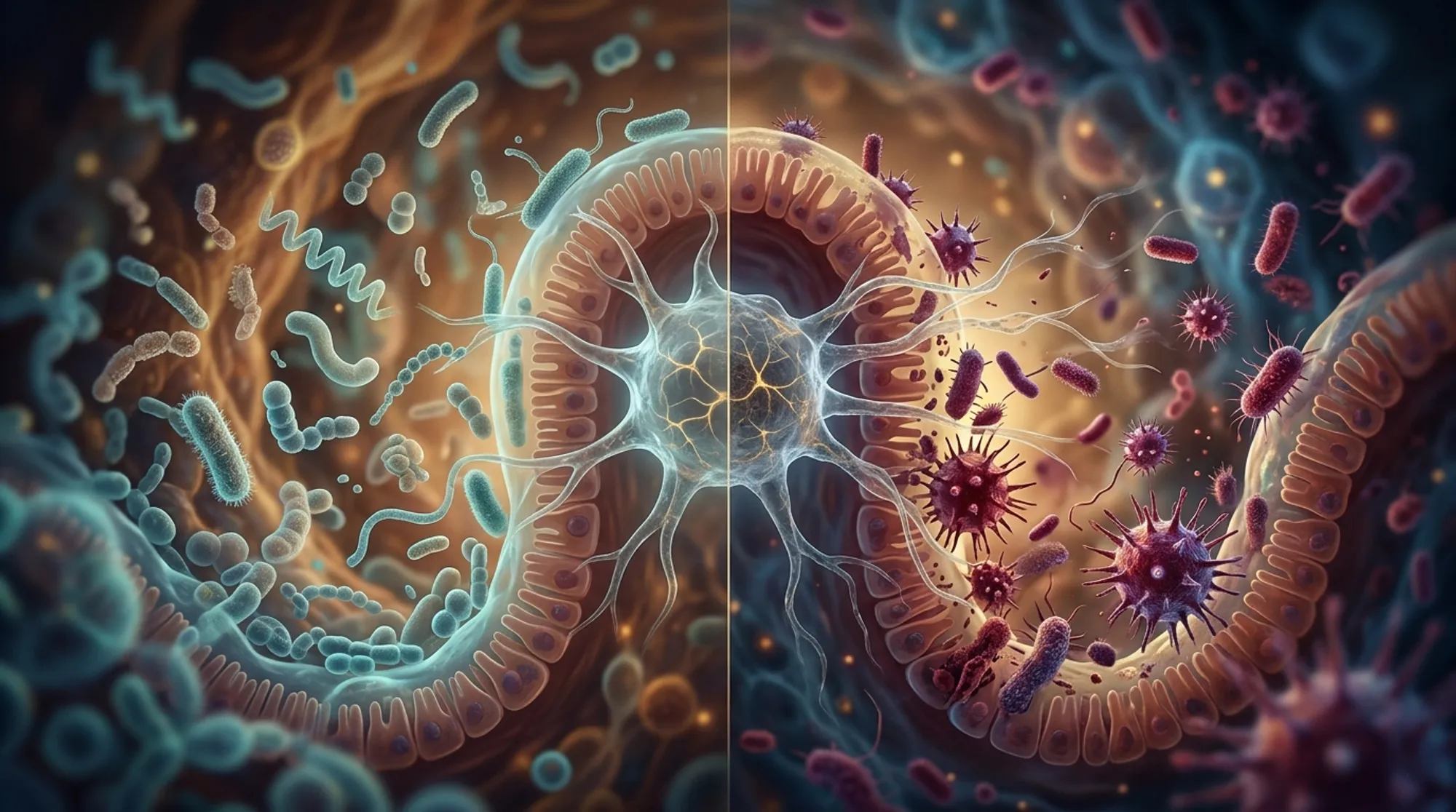
Our bodies are home to vast communities of microbes that play essential roles in digestion, immunity, and overall health. Remarkably, these microbial communities—our microbiomes—remain relatively stable throughout most of our lives. Yet as we grow older, this balance often unravels, leading to microbial imbalances that correlate with metabolic problems and disease. What causes this late-life collapse of the microbiome? Recent insights suggest that the answer lies in the aging immune system’s declining ability to monitor and control these microbial ecosystems.
TL;DR
- The immune system actively maintains microbiome balance by continuously sensing and controlling microbial growth and activity throughout adulthood.
- With age, immune surveillance weakens, allowing harmful microbes to escape control, disrupting microbial community structure and contributing to health decline.
Multicellular organisms, including humans, have evolved intricate partnerships with diverse microbes that live on and inside them. These microbes are not passive passengers—they contribute vital functions like nutrient metabolism, immune system development, and protection against pathogens. Over a lifetime, the microbiome is shaped by genetics, diet, environment, and immune activity, typically achieving a stable community during adulthood. However, in old age, this stability often breaks down, a phenomenon linked to increased disease risk. Understanding why this happens requires looking at how the host actively constructs and maintains its microbial niche, especially the role of immune surveillance.
This investigation synthesizes evidence from immunology and ecosystem ecology to propose a conceptual framework explaining age-related microbiome collapse. It draws parallels between immune surveillance mechanisms known from cancer biology—where immune cells continuously monitor and eliminate aberrant cells—and similar processes that regulate microbial communities. The authors review molecular pathways of innate immune sensing that detect microbial load, growth, and viability, and consider how these signals integrate to maintain microbial homeostasis. While largely conceptual, this approach integrates diverse biological disciplines to offer a fresh perspective on microbiome aging.
The authors argue that immune surveillance is a key organizing principle that actively constrains microbial proliferation and maintains community composition throughout adult life. This surveillance is not simply about recognizing microbial identity but about detecting microbial activity—specifically growth and metabolic state—through specialized immune receptors. As the immune system ages (immunosenescence), its precision and capacity decline, resulting in reduced ability to suppress opportunistic microbes. This leads to expansion of harmful taxa, loss of beneficial microbes, and breakdown of the ecological networks that support microbiome stability. Thus, age-associated dysbiosis arises from a failure of active immune control rather than passive drift.
This framework reframes the late-life deterioration of the microbiome as a failure of immune-mediated ecological control, suggesting new avenues for intervention. Instead of targeting microbial communities directly, therapies might focus on restoring immune surveillance capacity alongside ecological management of the microbiome. Such strategies could help maintain microbial balance, potentially mitigating age-related metabolic dysfunction and disease risk. This synthesis also highlights the importance of integrating immunology and microbial ecology to understand host–microbiome interactions across the lifespan.
It is important to note that this work is primarily conceptual, integrating existing knowledge rather than presenting new experimental data. Many details about how immune signals are integrated to regulate microbial communities remain unclear. The complexity of host–microbiome interactions and individual variability also pose challenges for translating these ideas into therapies. Further empirical studies are needed to test the proposed mechanisms and to develop practical interventions that can safely enhance immune surveillance and microbiome stability in aging populations.