
Watching Fungi Evolve: Experimental Evolution Sheds Light on How Fungal Pathogens Adapt and Become More Virulent

Article audio
Listen to a generated narration of this post.
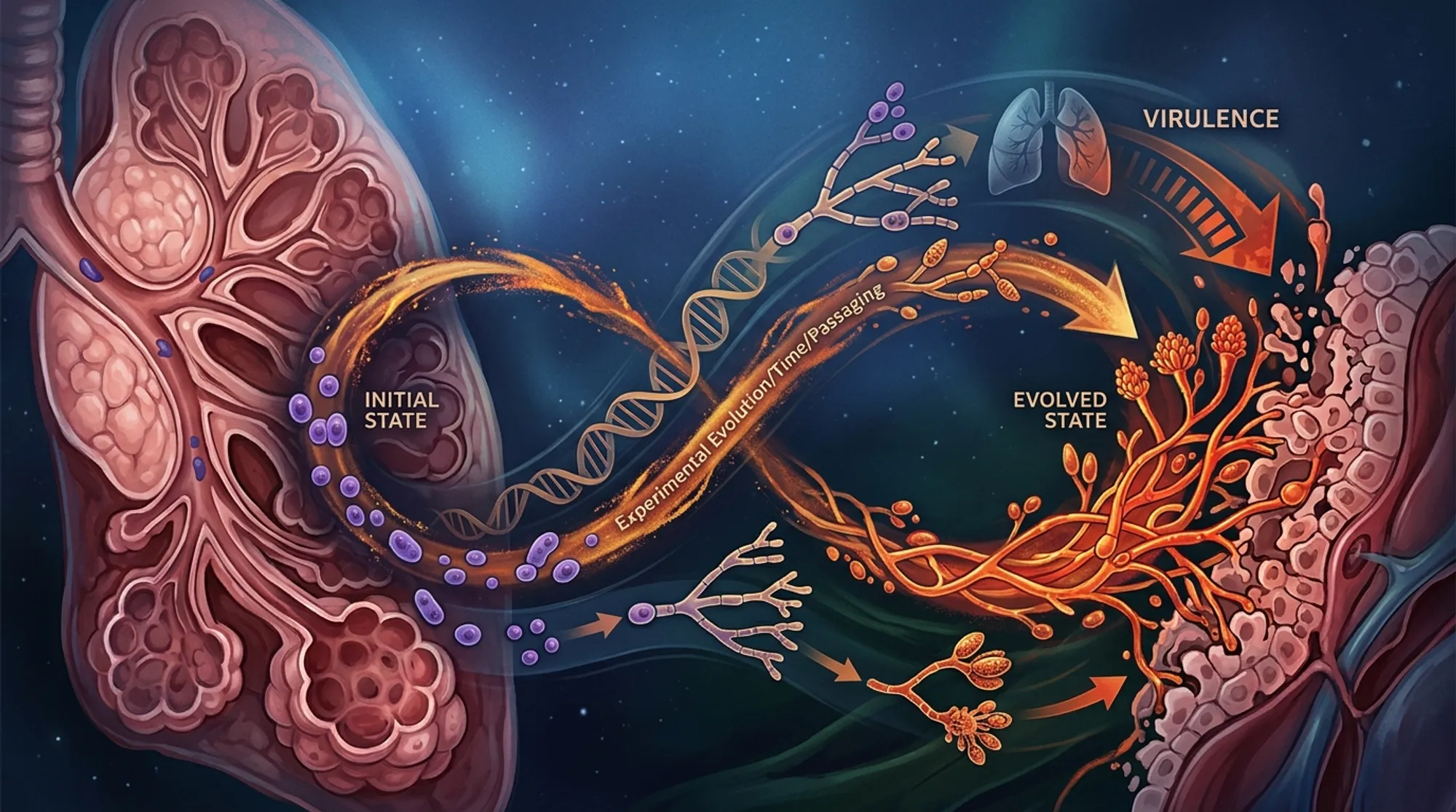
Imagine being able to watch evolution in action—not over millions of years, but in the lab, over weeks or months. Scientists are doing just that with fungal pathogens, the microscopic fungi that can cause serious infections in humans. By recreating the evolutionary pressures these fungi face inside hosts, researchers are uncovering how fungi adapt and sometimes become more dangerous. This approach, called experimental evolution, is opening new windows into the ongoing microscopic battle between fungal invaders and their hosts.
TL;DR
- Experimental evolution allows scientists to observe how fungal pathogens adapt to stresses like temperature, immune defenses, and nutrient availability, often revealing mutations that increase virulence or drug resistance.
- Studying fungal evolution in living hosts and laboratory models helps uncover genetic changes that shape infection outcomes, offering insights that could inform future treatments and infection control.
Fungal pathogens are a diverse group of microbes, with only a few species capable of causing life-threatening diseases in humans. These fungi may be environmental organisms or part of the normal microbiome, becoming harmful mainly in immunocompromised individuals. Understanding how fungi evolve to adapt to host environments and evade immune defenses is crucial, especially as new fungal pathogens emerge due to climate change and other factors. Experimental evolution—a method where researchers grow fungi under controlled conditions mimicking host stresses—provides a powerful tool to study these adaptation processes in real time.
In experimental evolution studies, fungal strains are cultured repeatedly under specific conditions that simulate challenges encountered in hosts, such as elevated temperature, oxidative stress from immune cells, limited nutrients, or exposure to antifungal drugs. Researchers track genetic and phenotypic changes over generations using advanced techniques like next-generation sequencing and genome editing tools. Some experiments also involve passaging fungi through animal models or co-culturing them with immune cells or environmental predators like amoebae, to observe adaptations that enhance survival and virulence.
These studies have revealed fascinating insights. For example, fungi exposed to higher temperatures can develop mutations that not only help them survive but also increase resistance to antifungal drugs. Passaging fungi with macrophages, key immune cells, can select for strains that change shape or grow filaments, helping them escape immune attack and become more virulent. Nutrient availability influences fungal metabolism and can lead to adaptations that improve colonization and damage to host tissues. Interestingly, fungi evolving in different host niches or organs show distinct genetic changes, sometimes reducing virulence to persist longer without killing the host. Experiments with amoebae suggest environmental predators may ‘train’ fungi to evade immune defenses, linking ecology and pathogenesis.
Understanding fungal adaptation through experimental evolution offers practical benefits. It helps identify genetic pathways that fungi use to become more virulent or drug-resistant, guiding the development of better antifungal therapies and infection management strategies. This approach also highlights the dynamic nature of fungal pathogens, emphasizing the need to consider evolutionary potential in clinical and environmental contexts. Moreover, it provides a framework to predict how emerging fungal threats might evolve in response to changing environments and medical interventions.
While experimental evolution provides valuable insights, it has limitations. Laboratory conditions cannot fully replicate the complex and variable environments fungi encounter in human hosts. Some adaptations observed in vitro may not translate directly to real infections. Additionally, evolutionary changes can be highly context-dependent, with mutations beneficial in one setting potentially detrimental in another. Therefore, findings from these experiments must be interpreted carefully and complemented with studies in animal models and clinical isolates to fully understand fungal pathogenesis.