

Article audio
Listen to a generated narration of this post.
What if your ovaries do more than just reproduction? For decades, ovaries have been primarily seen as organs dedicated to fertility, but recent perspectives suggest they play a much broader role in regulating female health and aging. Understanding ovarian aging could unlock new insights into women’s overall healthspan and longevity.
TL;DR
- Ovaries are not just reproductive organs; they act as systemic regulators influencing multiple tissues and organs throughout a woman’s life.
- Ovarian aging begins decades before menopause and profoundly affects female healthspan, yet it remains understudied in aging research.
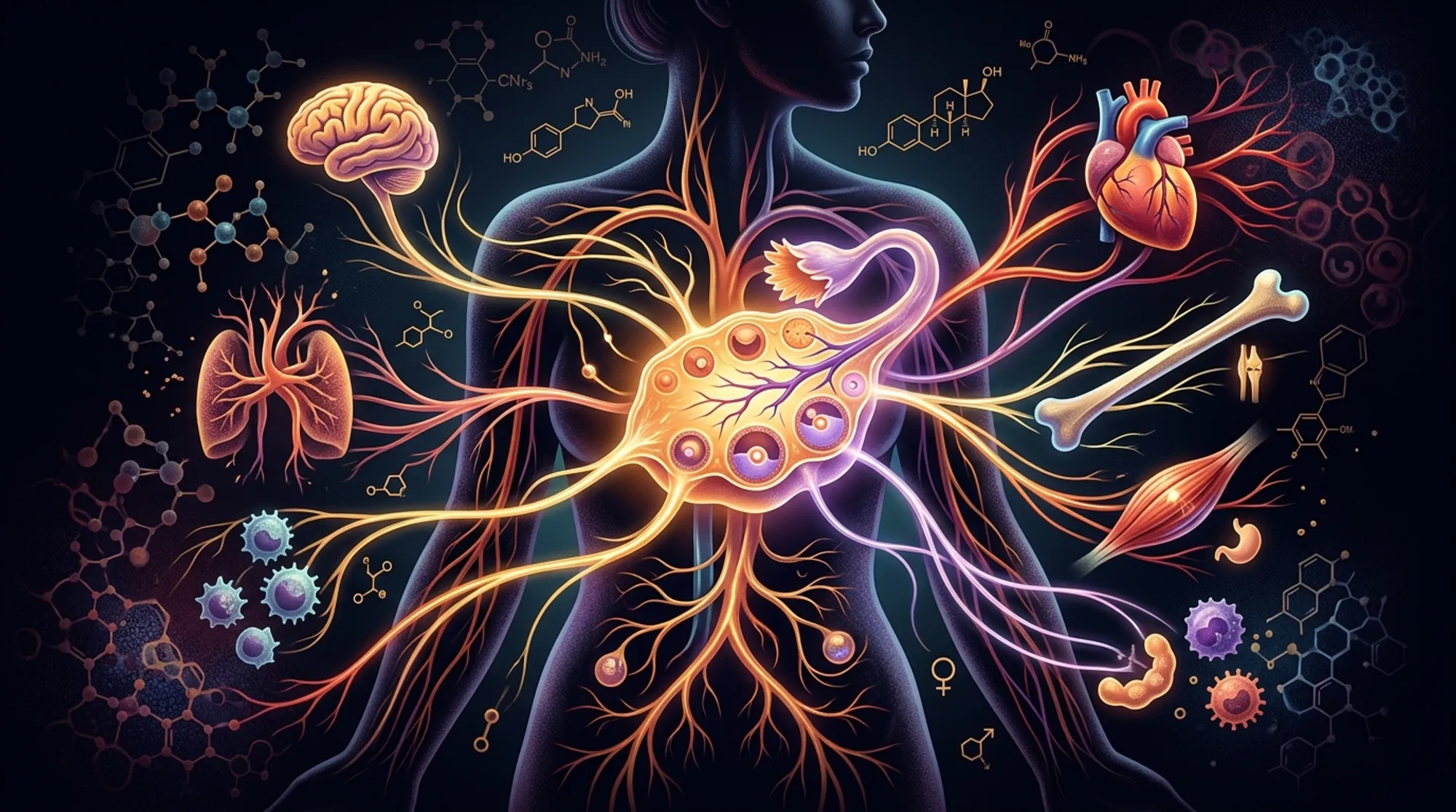
Traditionally, ovaries have been classified solely as reproductive organs, mainly responsible for producing eggs and regulating fertility. This narrow view has shaped clinical and research approaches, focusing largely on fertility and menopause. However, ovaries produce a complex array of hormones and signaling molecules that communicate with the brain, heart, immune system, bones, and more. These signals influence metabolism, immune function, and aging processes throughout the body. Unlike other organs, ovaries begin to age relatively early—often in a woman’s twenties or thirties—well before menopause becomes clinically apparent. This early decline sets off systemic changes that impact health over decades, making ovarian aging a central factor in female physiology and aging.
This perspective synthesizes findings from multiple fields including endocrinology, developmental biology, and geroscience. It draws on longitudinal human studies, proteomic analyses, and emerging single-cell atlases to highlight how ovarian function changes with age and how these changes ripple through the body’s signaling networks. The author emphasizes the need for large-scale, female-focused cohort studies that track ovarian aging markers alongside systemic health outcomes from young adulthood onward. Current research tools, such as omics technologies and preclinical models, are identified as promising avenues to deepen understanding of ovarian aging’s systemic effects.
The key insight is that ovarian aging is not limited to reproductive decline but represents a broader deterioration of an endocrine organ critical for systemic health. Ovarian aging alters the production of hormones beyond estrogen and progesterone, including growth factors and cytokines, which remain poorly characterized but likely influence aging in other organs. Women who experience premature ovarian failure or surgical removal of ovaries face increased risks of cardiovascular disease, cognitive decline, osteoporosis, and metabolic dysfunction, underscoring the ovary’s role beyond fertility. Despite these profound effects, ovaries have been largely absent from major aging studies and biological aging clocks, which often focus on the brain and immune system as key regulatory hubs.
Reframing ovaries as systemic regulators rather than solely reproductive organs challenges longstanding assumptions in biology and medicine. It highlights ovarian aging as a primary determinant of female healthspan, deserving central attention in aging research and clinical care. This shift could lead to earlier detection of ovarian aging, new therapeutic targets beyond hormone replacement, and improved strategies to promote healthy aging in women. Recognizing the ovary’s broader role also calls for more inclusive research designs that incorporate female biology from young adulthood through old age, potentially transforming our understanding of female longevity and wellness.
While this perspective offers a compelling conceptual framework, it is based on synthesis rather than new experimental data. Many ovarian signaling molecules beyond classical hormones remain poorly understood, and the precise mechanisms linking ovarian aging to systemic aging require further investigation. Large-scale, longitudinal studies tracking ovarian aging markers alongside diverse health outcomes are currently lacking. Additionally, individual variability in the timing and pace of ovarian aging complicates the development of universal interventions. Future research must carefully delineate ovarian aging from reproductive aging and explore how ovarian signals interact with other aging processes across the lifespan.